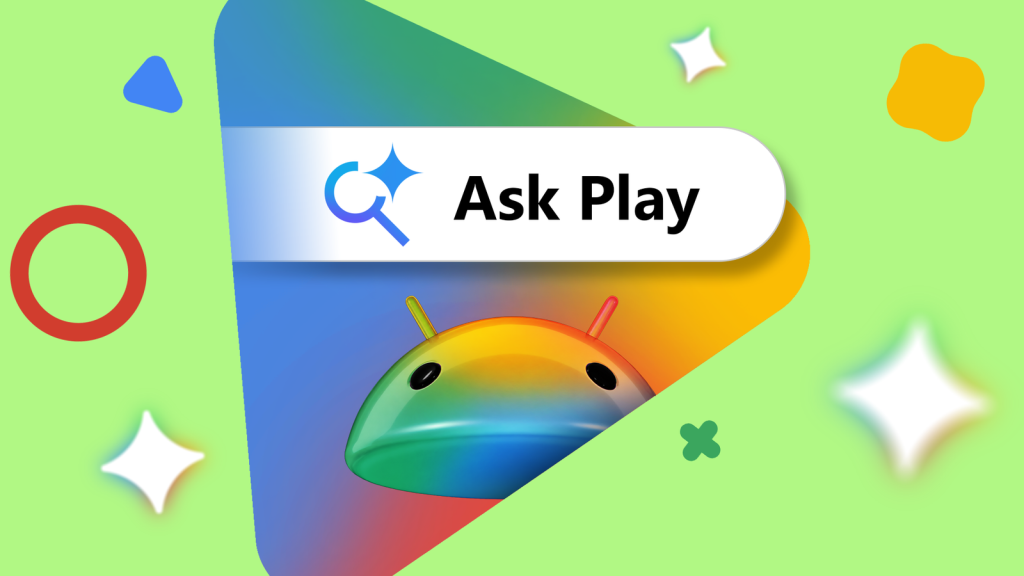

Finding a good Android app shouldn’t be difficult. Yet you’ve probably searched for an app before and had to scroll past ads, broken trust signals, and knockoffs before finding something worth installing.
At the May 2026 I/O conference, Google confirmed that it understands where app discovery needs to go next.
A Gemini-powered overhaul to app discovery is on the way to make the platform better at understanding intent-based searches. Let’s unpack what Google is changing.
Nobody told me about these 4 Google Play features — now they’re non-negotiable
I can’t live without them now
Gemini is turning Play Store search into a conversation

The foundation for Ask Play was already there. Google previously tested the waters by letting users ask Gemini questions about individual apps via a small text box on the listing page.
Now, that concept has evolved into an interactive AI search overlay. You can describe what you need however feels most natural, and Gemini will guide you.
Better yet, Gemini handles multistep searches, remembering the context of your previous questions to narrow down the perfect app as you refine your criteria.
If the first batch of recommendations isn’t what you had in mind, you don’t have to scrap your search and start over.
Let’s say you ask the overlay for a puzzle game without a paywall, and it generates a list.
You can immediately reply, “Now only show me the ones that play offline,” and keep shrinking the pool until you land on the right pick.
Ask Play Highlights could cut down on wasted clicks

Bouncing between app pages just to see if a download is worth your time is tedious. You click a listing, skim the description, realize it’s a dud, back out, and start the cycle over.
Google’s answer to that loop is Ask Play Highlights, which shows a high-level summary in the search results, so users can get a sense of their options before opening an app listing.
Google is giving casual app browsing a video feed

Ask Play is great for when you have a specific problem to solve, but Google also wants to grab the people who are window-shopping with Play Shorts.
It’s what it sounds like. A vertical video feed of app gameplay and interfaces is put into the Play Store. Personally? I don’t really like it.
The very last thing my phone needs is yet another TikTok-style feed. But personal grievances aside, it introduces a dual-funnel system that some users may prefer.
App Store optimization is about to get more intent-driven

Ask Play relies on semantic understanding and user intent, which means that throwing a word salad into an app description is unlikely to do developers many favors in search.
To survive the update, devs will need to plainly explain what their app does and why someone should care. But even in a more AI-driven Play Store, descriptions won’t be the final word.
A Gemini-powered discovery layer could make reviews, ratings, engagement, and other metrics more useful by reading them through the lens of user intent.
Imagine you search “best budgeting app that doesn’t have bank sync problems.”
If one app has recent developer replies around solving sync issues, that gives Google a stronger signal that the team is dealing with the problem.
This gives the app an edge over a rival that offers bank sync but leaves users hanging.
My bet is that Ask Play won’t stop at the edges of the Play Store. It’s only a matter of time before the system starts pulling in signals from the open web.
Google already indexes the internet, and Gemini gives it the perfect tool to connect an app’s store listing with the broader conversation happening around it.
Gemini can now help when you get stuck in a game

Gamers are getting their own AI with Play Games Sidekick. If you hit a wall in an RPG game or a boss keeps flattening you, Gemini can now come to the rescue.
Normally, you’d tab out to a Reddit thread or a YouTube tutorial video. Now, you can swipe in the Sidekick overlay for tips.
Google’s AI push might actually help here
Being pushed into using experimental AI isn’t fun. But in this case, what Gemini is replacing wasn’t doing us any favors.
Ask Play will probably have a few rough edges, but like any major rework, it will improve.
For developers, the clock is ticking to audit their store listings and make sure their value proposition is good enough for an AI to digest.
Those who adapt early will reap the rewards of Google’s discovery funnel before the competition catches on.
PakarPBN
A Private Blog Network (PBN) is a collection of websites that are controlled by a single individual or organization and used primarily to build backlinks to a “money site” in order to influence its ranking in search engines such as Google. The core idea behind a PBN is based on the importance of backlinks in Google’s ranking algorithm. Since Google views backlinks as signals of authority and trust, some website owners attempt to artificially create these signals through a controlled network of sites.
In a typical PBN setup, the owner acquires expired or aged domains that already have existing authority, backlinks, and history. These domains are rebuilt with new content and hosted separately, often using different IP addresses, hosting providers, themes, and ownership details to make them appear unrelated. Within the content published on these sites, links are strategically placed that point to the main website the owner wants to rank higher. By doing this, the owner attempts to pass link equity (also known as “link juice”) from the PBN sites to the target website.
The purpose of a PBN is to give the impression that the target website is naturally earning links from multiple independent sources. If done effectively, this can temporarily improve keyword rankings, increase organic visibility, and drive more traffic from search results.