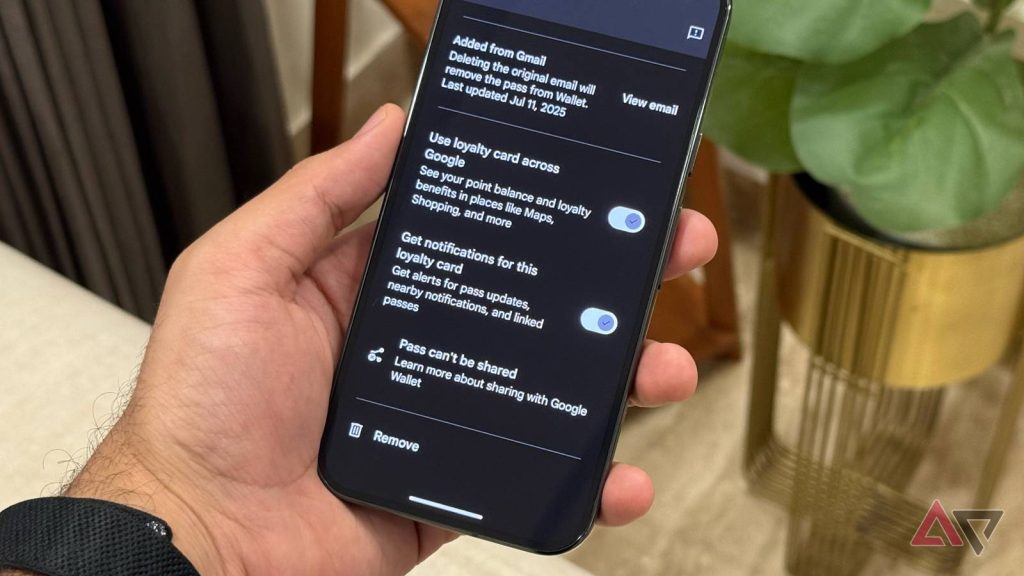

I recently switched from my Samsung Galaxy phone to a Motorola handset as my primary phone, so I had to ditch Samsung Wallet in favor of Google Wallet.
Google’s digital wallet doesn’t feel as seamless as I want, but it gets the job done in most cases.
I have no plans to go back to using another Samsung Galaxy phone any time soon, so I’ve transferred all my cards and passes to Google Wallet.
I’ve also replaced my transit card with Google Wallet and started using it for transit, something I had never done with any other digital wallet.
Maybe the beginner’s experience of using transit cards in a digital wallet made Google Wallet even more exciting. However, not everything about it was rosy.
It threw some surprises, showed me the limitations of digital transit cards, and, regrettably, I only learned about them after using Google Wallet for transportation.
I replaced my transit card with Google Wallet, and here is what I wish I had known beforehand.
12 things to add to Google Wallet that aren’t your credit card
Use Google Wallet for more than payments
Google Wallet made my commute feel effortless

I used transit passes in Google Wallet in my region and abroad, and it felt like two different systems. This wasn’t unexpected, as Google Wallet doesn’t work the same across all parts of the world.
While the experience wasn’t the same everywhere, Google Wallet made commuting effortless whenever I used it to get around town with my phone.
In my region, transit cards don’t work the same way in Google Wallet as they do in countries like the US and Canada.
For example, in India, I buy transport passes for the metro train services using Google Wallet and store them for quick entry or exit through the Automatic Fare Collection gate.
I don’t have to stand in a long queue, nor do I have to worry about whether the paper QR code gets torn, smudged, or folded.
Also, when the QR code stays on my phone, the pass stays flat and parallel to the scanner lens, making the detection process faster and error-free.
However, this works with a select number of metro operators and isn’t available throughout the country.
When it comes to supporting transit cards, the situation isn’t any different in the US and Canada. Google Wallet supports only a limited number of transit cards.
I used one in Google Wallet while living abroad, and it made my commute truly hassle-free.
While living abroad, I converted my physical transit card into a digital one and stored it in Google Wallet. This is more convenient than purchasing transit passes each time I move from one point to another.
I can add money to the transit card using Google Wallet and then use it like I use credit cards to make payments on POS terminals via NFC.
I don’t even need to unlock my phone to use the digital transit card in Google Wallet.
Then I started noticing that the reality is a little more complicated

In the first few days of replacing the transit card with Google Wallet, everything, other than limited support for transit cards, felt smooth.
The service hasn’t deteriorated over time, but as I used my digital transit card in Google Wallet, I came across some serious downsides of replacing the physical transit card with a digital one.
The first, and perhaps the biggest one, is that you can no longer access your physical transit card.
After transferring your plastic transit card to Google Wallet, the physical card will be deactivated and will no longer work.
This means your spouse, sibling, parents, and child will forever lose access to your transit card because a transit pass can only be saved to one device at a time.
You can only move your transit card from one phone to another, but you can’t have the same card on multiple devices running Google Wallet.
Another major downside of the digital transit card in Google Wallet is that you need to rely heavily on your phone for your commute.
If the phone’s battery dies, you likely won’t be able to use the digital card in Google Wallet.
Unlike Apple Wallet’s Express Transit with Power Reserve, Google Wallet doesn’t guarantee that the transit card will continue working for up to five hours after the iPhone’s battery dies.
I wish open-loop transit payments were the norm everywhere
Transit being tied to only one device is a huge deal-breaker for me. But that’s the price you pay for the convenience.
Although transit cards have their own benefits, such as concessions and agency-specific benefits, an open-loop transit system would be a better approach.
It allows you to pay directly with your credit or debit cards using Google Wallet. This, in turn, means you don’t have to manage multiple transit cards or move them between devices.
I wouldn’t have transferred my transit card to Google Wallet if open-loop transit payments were the norm everywhere.
PakarPBN
A Private Blog Network (PBN) is a collection of websites that are controlled by a single individual or organization and used primarily to build backlinks to a “money site” in order to influence its ranking in search engines such as Google. The core idea behind a PBN is based on the importance of backlinks in Google’s ranking algorithm. Since Google views backlinks as signals of authority and trust, some website owners attempt to artificially create these signals through a controlled network of sites.
In a typical PBN setup, the owner acquires expired or aged domains that already have existing authority, backlinks, and history. These domains are rebuilt with new content and hosted separately, often using different IP addresses, hosting providers, themes, and ownership details to make them appear unrelated. Within the content published on these sites, links are strategically placed that point to the main website the owner wants to rank higher. By doing this, the owner attempts to pass link equity (also known as “link juice”) from the PBN sites to the target website.
The purpose of a PBN is to give the impression that the target website is naturally earning links from multiple independent sources. If done effectively, this can temporarily improve keyword rankings, increase organic visibility, and drive more traffic from search results.